Time slips away faster than we’d like to admit. Between meetings, emails, projects, and unexpected fires to put out, the workday can feel like a blur where you’re constantly busy but never quite caught up. The truth is, poor time management doesn’t just affect your productivity—it directly impacts your ability to maintain a healthy work-life balance.
Effective time management isn’t about squeezing more tasks into your day. It’s about working smarter, prioritizing what truly matters, and creating space for both professional excellence and personal fulfillment. When you master your time, you gain control over your life.
Why Time Management Matters for Balance
Time is your most finite resource. Unlike money or energy, you can’t earn more time or save it for later. Every person gets exactly 24 hours each day. The difference between people who feel overwhelmed and those who feel in control often comes down to how intentionally they use those hours.
Poor time management creates stress. When you’re constantly behind, rushing from one task to the next, or working late to catch up, stress becomes your default state. This chronic stress erodes both work performance and personal well-being.
Good time management creates freedom. When you manage your time effectively, you complete important work during work hours and can fully disconnect during personal time. This separation is essential for avoiding burnout at work.
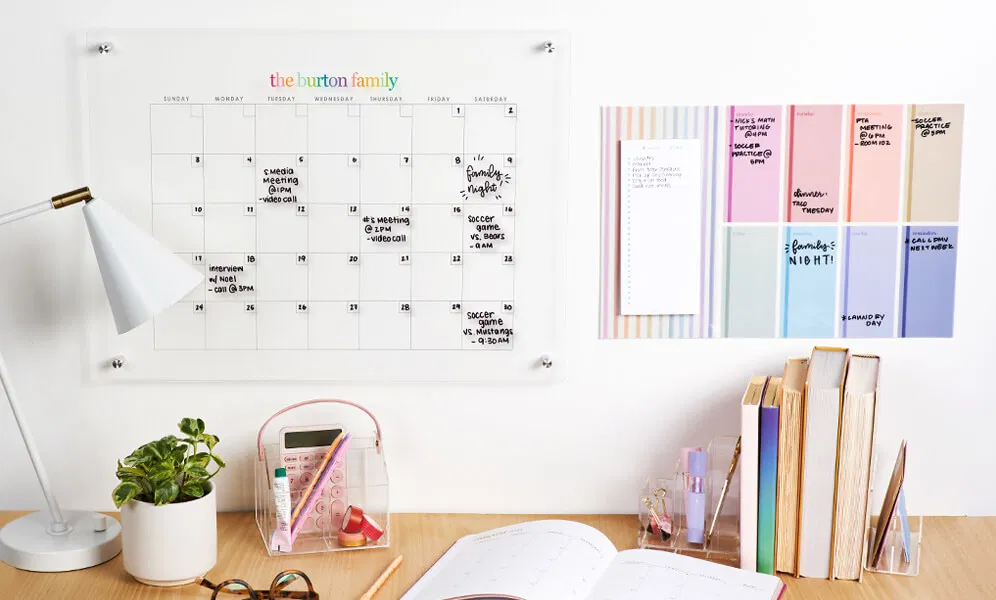
Time management tips calendar and planner organization
12 Time Management Tips That Actually Work
1. Start With a Time Audit
Before you can improve how you spend your time, you need to understand where it currently goes.
Track your time for one week. Use a simple spreadsheet or time-tracking app to log how you spend each hour. Be honest—include time spent on social media, chatting with coworkers, or getting coffee.
Identify patterns. Look for time drains, interruptions, and activities that don’t align with your priorities. You might be surprised to discover you spend 90 minutes daily on email or lose 2 hours to unnecessary meetings.
Calculate your available focused work time. After accounting for meetings, email, breaks, and administrative tasks, how many hours of deep work time do you actually have? This reality check helps you set realistic expectations.
2. Use Time Blocking
Time blocking transforms your to-do list into a structured schedule that protects your most important work.
Assign tasks to specific time blocks. Instead of a vague plan to “work on the report,” block 9-11 AM for focused report writing. This creates accountability and prevents tasks from expanding indefinitely.
Group similar tasks together. Batch all your calls into one block, handle email during designated times, and schedule meetings consecutively rather than scattered throughout the day. This reduces the mental fatigue of constant context-switching.
Include buffer time. Don’t schedule back-to-back blocks. Leave 15-30 minutes between major tasks for processing, preparation, or unexpected issues. These buffers prevent your entire schedule from derailing when something takes longer than expected.
3. Apply the 80/20 Rule
The Pareto Principle states that 80% of your results come from 20% of your efforts. Identify and prioritize that critical 20%.
Ask yourself: “Which tasks, if completed excellently, would have the biggest impact on my goals?” These high-leverage activities deserve your best time and energy—typically your peak focus hours in the morning.
Minimize or eliminate low-impact activities. Some tasks create the illusion of productivity without moving meaningful goals forward. Reduce time spent on these or delegate them when possible.
4. Implement the Two-Minute Rule
This simple rule from David Allen’s “Getting Things Done” methodology prevents small tasks from cluttering your mind and to-do list.
If it takes less than two minutes, do it immediately. Responding to a quick email, filing a document, or making a brief phone call takes less time to complete than to track, schedule, and remember later.
Be selective. Don’t let two-minute tasks interrupt deep work. Apply this rule during designated administrative time or between larger tasks.
5. Use the Eisenhower Matrix
Not all tasks deserve equal attention. The Eisenhower Matrix helps you prioritize by urgency and importance.
Quadrant 1 (Urgent & Important): Do these immediately—crises, deadlines, critical problems.
Quadrant 2 (Not Urgent but Important): Schedule these—strategic planning, relationship building, professional development, health activities. This quadrant is where meaningful progress happens.
Quadrant 3 (Urgent but Not Important): Delegate these when possible—interruptions, some emails, others’ priorities.
Quadrant 4 (Neither Urgent nor Important): Eliminate these—time wasters, excessive social media, busywork.
Most people spend too much time in Quadrants 1 and 3, reacting to urgency. Intentionally protecting time for Quadrant 2 activities prevents many Quadrant 1 crises from developing.
6. Set Clear Daily Priorities
Starting your day without clear priorities is like embarking on a road trip without a destination.
Identify your top 3 priorities each morning. What are the three most important outcomes for today? Write them down before checking email or diving into work.
Tackle your most important task first. Complete at least one significant priority before attending meetings or responding to others’ requests. This ensures that even if the day becomes chaotic, you’ve moved your most critical work forward.
Review and adjust. At day’s end, review what you accomplished and plan tomorrow’s priorities. This 5-minute practice creates continuity and prevents important tasks from slipping through the cracks.
7. Minimize Meetings
Meetings are necessary for collaboration and decision-making, but they’re also one of the biggest time drains in modern work.
Question whether meetings are necessary. Could this be handled via email, a quick phone call, or a shared document? Not every discussion requires gathering multiple people synchronously.
Set clear agendas. Every meeting should have a specific purpose and agenda distributed in advance. Without clear objectives, meetings meander and waste everyone’s time.
Keep meetings short. Default to 25 or 50-minute meetings instead of 30 or 60. This builds in buffer time and forces more focused discussions.
Decline meetings strategically. If you’re not essential to the meeting’s purpose or outcome, politely decline and ask for a summary afterward.
8. Create Email Boundaries
Email can consume unlimited time if you let it. Set boundaries to prevent email from fragmenting your entire day.
Don’t start your day with email. Beginning with email means starting in reactive mode, responding to others’ priorities instead of pursuing your own.
Check email at designated times. Instead of constantly monitoring your inbox, batch email processing into 2-3 scheduled blocks daily. Let colleagues know your email response pattern.
Use the “Five Sentences” rule. Keep most emails under five sentences. If something requires more extensive discussion, schedule a call or meeting instead.
Unsubscribe aggressively. Reduce incoming volume by unsubscribing from newsletters you don’t read and using filters to automatically organize email.
9. Leverage Technology Wisely
The right tools can streamline your work, but too many tools create their own complexity.
Use project management software. Tools like Asana, Trello, or Monday help organize tasks, track progress, and collaborate with teams more efficiently than scattered emails and spreadsheets.
Automate repetitive tasks. Set up email filters, use text expansion tools for frequently typed responses, and create templates for routine documents.
Block distracting websites. During focused work time, use browser extensions like Freedom or Cold Turkey to block social media and news sites that tempt you away from deep work.
10. Build in Break Time
Counter intuitively, taking regular breaks actually improves productivity and time management.
Try the Pomodoro Technique. Work in focused 25-minute intervals with 5-minute breaks between them. After four cycles, take a longer 15-30 minute break. This rhythm maintains mental freshness throughout the day.
Step away from your desk. Physical movement during breaks—even just walking to get water—improves circulation, reduces muscle tension, and refreshes your mind.
Take a real lunch break. Working through lunch might seem efficient, but it leads to afternoon fatigue and reduced productivity. A proper lunch break provides the mental reset you need for strong afternoon performance.
11. Learn to Say No
Every yes to a new commitment is an automatic no to something else—including rest, family time, or existing priorities.
Evaluate requests against your priorities. Before agreeing to take on something new, consider whether it aligns with your goals and whether you have realistic capacity to do it well.
Practice polite refusal. “I appreciate you thinking of me, but I don’t have bandwidth for this right now” is a complete response that doesn’t require lengthy justification.
Protect your calendar. Block time for your priorities before others fill your schedule with their needs.
12. Plan for Tomorrow Today
Spending 10 minutes at the end of each day planning tomorrow dramatically improves next-day productivity.
Review what you accomplished. Acknowledge progress and identify anything that needs to carry forward.
Identify tomorrow’s top 3 priorities. Decide in advance what success looks like for the next day.
Prepare materials. If you have an important meeting or project, gather necessary materials in advance so you can start strong tomorrow without scrambling.
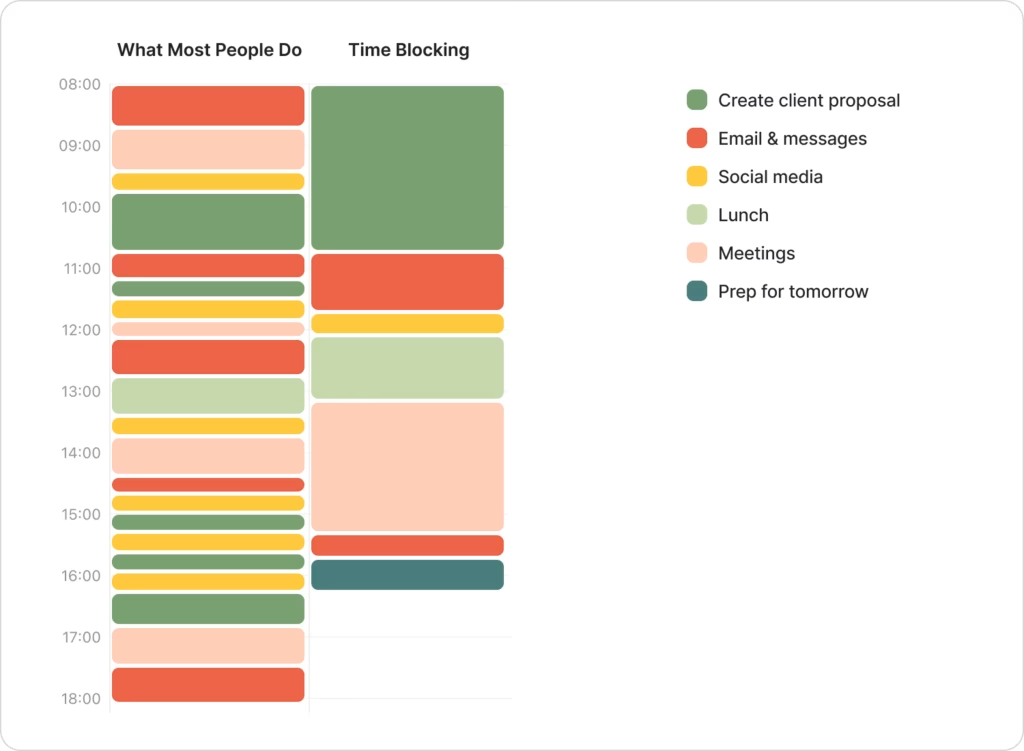
Time blocking schedule productivity system
Implementing Your Time Management Strategy
Start with one or two techniques that resonate most with your current challenges. Master those before adding more strategies. Time management is a skill that improves with practice—be patient with yourself as you develop new habits.
Remember that effective time management supports your overall work-life balance. The goal isn’t just productivity—it’s creating a sustainable work style that allows you to excel professionally while maintaining space for the personal priorities that make life meaningful.
Building strong wellness and productivity habits alongside these time management strategies creates a foundation for long-term success and satisfaction.
Take action today: Choose one time management tip from this list and implement it consistently for two weeks. Track the difference it makes in your productivity and stress levels, then gradually add additional strategies as they become habits.